Welcome
How to order transport with Royal Ambulance.
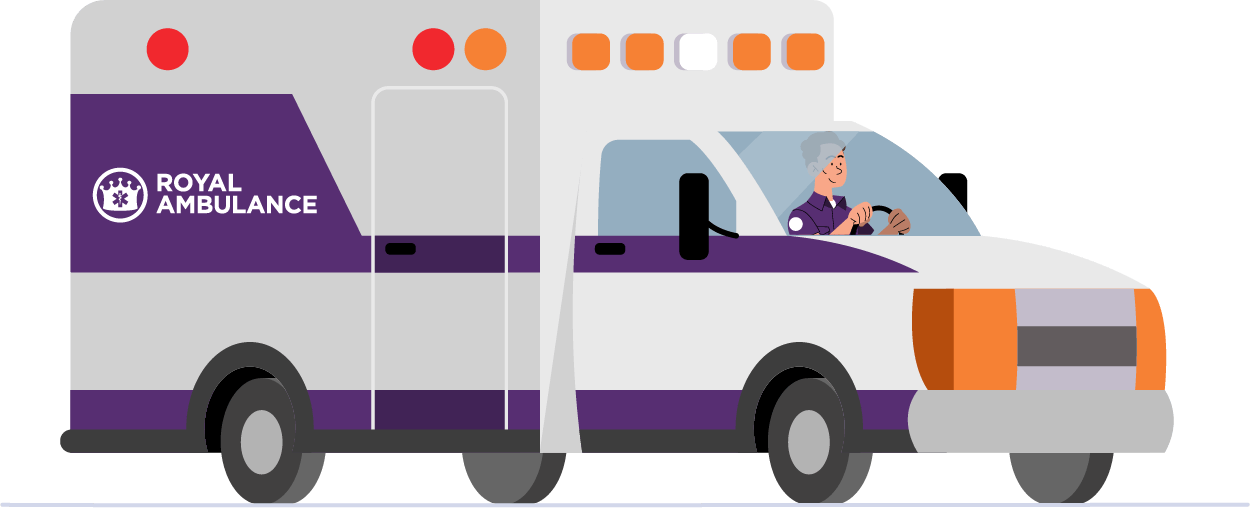
By the end, you’ll be able to
- Decide when a patient’s current condition needs an ambulance
- Know when prior authorization is required
- Have the patient’s transport information ready when you order
Takes about 5 to 8 minutes.
Scene 02
Meet Royal Ambulance.

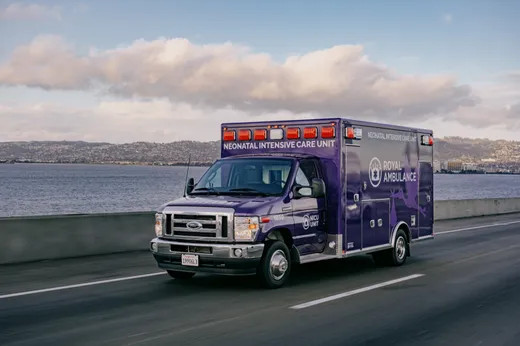
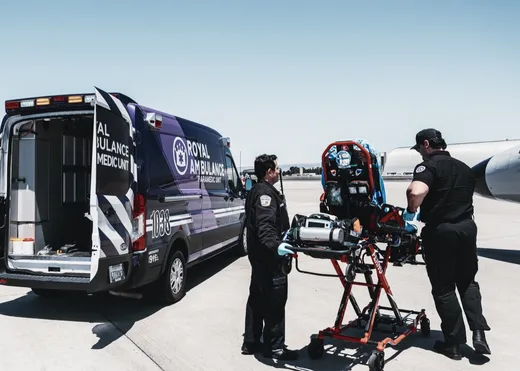
- All seven Bay Area counties, plus long-distance transfers
- Every level of service: BLS, ALS, CCT, NICU, and ECMO
- Twenty years moving patients for Bay Area hospitals
Scene 03
Three checks before each order.
- Patient condition Does the patient’s current condition need an ambulance?
- Prior authorization Does this trip need prior authorization?
- Info to have ready Have the patient’s transport information prepared.
Patient condition
When does a patient’s current condition qualify for an ambulance?
A patient’s current condition determines the level of service that fits, for every patient and every payer. Medicare sets the strictest bar, so meeting it keeps billing smooth and your patient and facility free of surprise charges.
Usually qualifies
- Active psych hold or restraints
- Extreme isolation a van can’t safely handle (rare)
- Significant change in mental status or oxygen needs
- IV fluids running
- New or severe pain needing positioning or ortho devices
- Moving up to a higher level of care
- Bed-confined (the patient is unable to get up from a bed without assistance, unable to ambulate, and unable to sit in a chair or wheelchair) plus another qualifying need
Usually doesn’t
- Post-active psych hold
- Isolation when going home or to a shared room
- COVID without qualifying symptoms
- Chronic-condition oxygen the patient can self-administer
- Fall risk
- Home, hospice, or SNF destination, with no qualifying condition
- “No other transport was available”
- Bed-confined alone, with no other clinical reason
The final determination will also incorporate the crew’s assessment and patient care report, for insurance consideration.
0 / 7 sorted
IV fluids running
Open reference
Usually qualifies
- Active psych hold or restraints
- Extreme isolation a van can’t safely handle (rare)
- Significant change in mental status or oxygen needs
- IV fluids running
- New or severe pain needing positioning or ortho devices
- Moving up to a higher level of care
- Bed-confined (the patient is unable to get up from a bed without assistance, unable to ambulate, and unable to sit in a chair or wheelchair) plus another qualifying need
Usually doesn’t
- Post-active psych hold
- Isolation when going home or to a shared room
- COVID without qualifying symptoms
- Chronic-condition oxygen the patient can self-administer
- Fall risk
- Home, hospice, or SNF destination, with no qualifying condition
- “No other transport was available”
- Bed-confined alone, with no other clinical reason
All seven sorted. Nicely done.
Patient condition
If you only remember one thing.
Does the patient’s current condition need an ambulance, or could they travel safely another way?
At the time of transport, not at admission.
Destination counts too. Insurance usually covers transport only to the closest appropriate facility.
Prior authorization
Prior authorization.
Some trips need prior authorization first. Most you can just place. Here’s the short list.
Get prior authorization first
-
Medi-Cal discharge home
Most Medi-Cal plans use a broker like ModivCare. A discharge home usually needs broker authorization before the trip.
Just place the order
-
Medi-Cal discharge to a SNF, rehab, or psych facility
A Medi-Cal discharge to a SNF, rehab, or free-standing psych facility doesn’t need broker authorization.
-
Higher level of care or CCT transfers
A higher level of care or CCT transfer doesn’t wait on broker or any other authorization, even on Medi-Cal. Place the request and move the patient.
-
Emergency or 911-type transport
Emergency transports never need broker or insurer authorization.
-
Commercial plans
Call Royal, not the plan. We obtain commercial authorization for you, after transport.
Not sure? Check the insurance card or call Royal.
Info to have ready
Info to have ready.
Place a complete order and Royal sends the level of service that fits, without callbacks or delays, keeping the handoff smooth and off your plate.
Who and where
- Patient name, DOB, weight
- Pickup unit, room, and floor
- Destination and reason for transport
So the crew arrives at the bed and patient on the order.
What they need en route
- Level of service
- Basic (BLS)
- Advanced (ALS)
- Critical care (CCT)
- Isolation precautions, if any
- Oxygen needs, lines, drips, equipment in use
- Mobility status
So Royal sends the rig and gear that fit on the first dispatch.
How to reach you
- Ordering clinician and a callback number
- Insurance and prior authorization status
So Royal can reach you back if something changes mid-trip.
Scene 08
Who to call.
Two numbers worth saving.
Time-sensitive questions about a transport
Royal Communications, on duty 24/7. Same line for status checks, ETA updates, or last-minute changes.
(000) 000-0000Bigger questions, feedback, or workflow changes
Your Royal Customer Success Manager is Your Royal CSM.
Scene 09
Quick check.
Question 1 of 4
Score 0 / 4
Patient condition · Question 1 of 4
A patient is going home from your ED. They manage a chronic oxygen need on their own and are steady, alert, and ambulatory. Does this patient need an ambulance?
Chronic, self-managed oxygen on its own usually doesn’t establish medical necessity at the time of transport. Insurance looks at why a patient can’t self-administer, and needs a medical reason, not a supply one. A wheelchair van or other non-emergency transport is often the fit here.
A self-managed chronic O₂ patient who’s steady and ambulatory usually has safer, lower-cost options. The diagnosis isn’t the test. The current condition at the time of transport is.
Open reference
Order off the current condition at the time of transport, not at admission. Insurance looks at why a patient can’t self-administer oxygen, and needs a medical reason, not a supply one.
Patient condition · Question 2 of 4
A patient came in through the ED by ambulance for sepsis. After three days of antibiotics they’re stable and discharging. Do they need an ambulance now?
Order off the current condition at the time of transport, not the admitting diagnosis. A patient can arrive by ambulance and leave by another mode once they’re stable.
How they arrived isn’t the test. After treatment they may no longer need an ambulance, so judge the current condition at discharge, not at admission.
Open reference
The condition at the time of transport determines the level, not the admitting diagnosis. A patient can arrive by ambulance and leave by another mode once stabilized.
Prior authorization · Question 3 of 4
Your Medi-Cal patient is declining and needs to move to the ICU at another hospital. The family is anxious about delays. What do you do about prior authorization?
Higher level of care transfers don’t need broker or any other authorization, even on Medi-Cal. The clinical need carries the trip, so don’t let auth hold up a declining patient.
Don’t wait. A higher level of care transfer doesn’t need broker or any other authorization. The clinical need carries the trip, and holding for auth would delay a declining patient.
Open reference
A higher level of care or CCT transfer doesn’t wait on broker or any other authorization, even on Medi-Cal. For commercial plans, call Royal, not the plan, and we obtain the authorization.
Info to have ready · Question 4 of 4
You’re placing a Critical Care Transport (CCT). You have the patient’s name, unit, and destination. What else does the order need?
The more the crew knows at the order, the sooner the rig and gear that fit show up.
That’s the start, but a CCT order needs weight, equipment, and clinical detail too. Otherwise the crew arrives under-prepared.
Open reference
Who and where, what they need en route (level of service, isolation, O₂, lines and drips, mobility), and how to reach you (callback number and insurance).
Put it together
One call, start to finish.
Now put the three checks together on a real call. Work through each step.
- O₂ 2 L, cannot self-manage
- IV fluids infusing
- Patient condition Step 1 of 3
What level of service does her condition call for?
Tap the other options to see why they don’t fit.
- Prior authorization Step 2 of 3
She has a commercial plan. What about prior authorization?
Tap the other options to see why they don’t fit.
- Info to have ready Step 3 of 3
What do you have ready when you place the order?
Tap the other options to see why they don’t fit.
That’s the whole flow: an ambulance for her current condition, Royal handling her plan’s authorization, and a complete order ready. Same logic for every patient and every payer.
Feedback
How did we do?
Your feedback shapes the next version of this training. It takes a few seconds, and it’s optional.
Thank you. Your feedback is in, and it helps us make ordering transport easier.
Want more training, or have a question?
Your Royal Customer Success Manager can set up more education for your unit or answer anything that came up.
- Your Royal CSM
- csm@royalambulance.com
- (000) 000-0000
Complete
You’re ready.
Royally Awesome Orderer
- 7Cases sorted
- 4/4Quick check
- 3Checks mastered
Want to make it official?
Add your email to put your completion on record, and we’ll keep you posted when the workflow changes.
You’re all set. Thanks for completing the training.